Ask an agent what a home costs in West Town and they will hand you a single number. As of May 2026, that number is a median sale price near $715,000, up 9.1 percent from the same three-month window a year earlier. It sounds like a tidy fact. It is also the least useful number in the neighborhood.
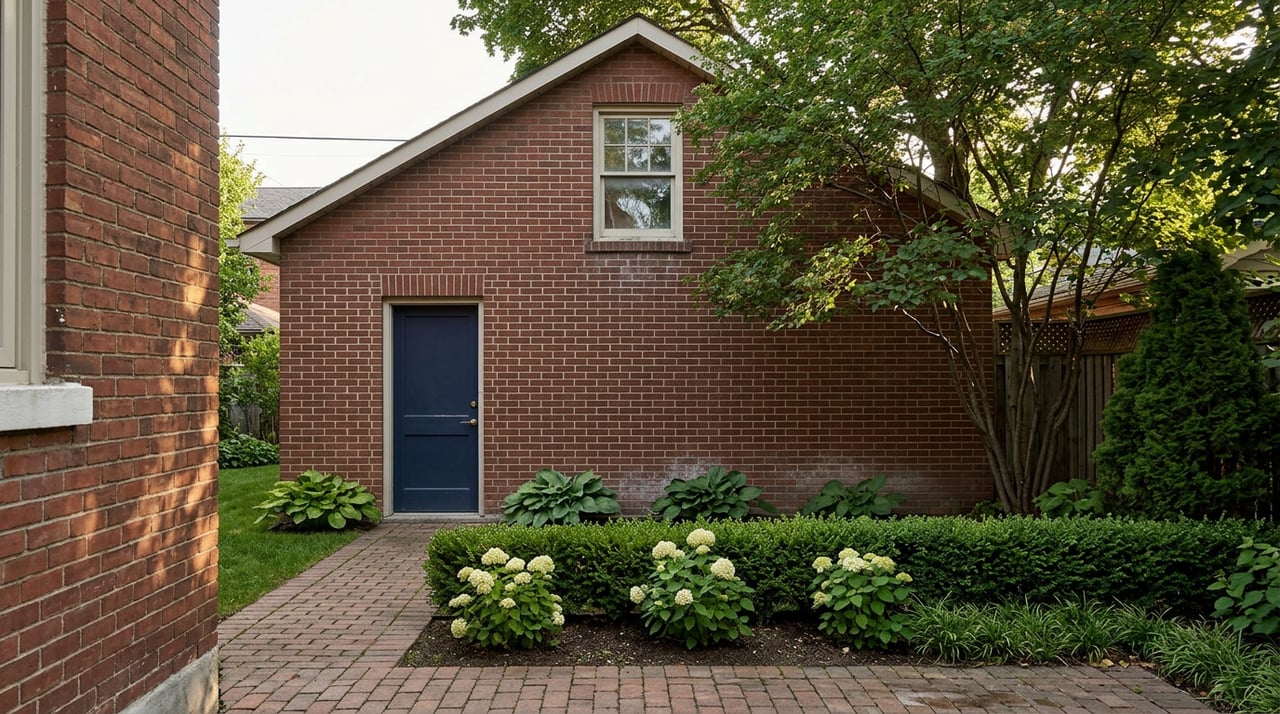
Here is the number that should stop you: multi-family properties in West Town, the two- and three-flats with a coach house tucked behind them, carry a median list price of $887,000 as of early August 2026. They are the most expensive product type in the neighborhood. They also sit on the market for 57 days and draw roughly one offer, while the broader market moves in 37 days on a base of sales that climbed from 425 to 528 year over year. The priciest homes in West Town are also the slowest to sell. That is backwards from how a hot market is supposed to behave, and the reason why says more about this neighborhood than any median ever will.
One address, four different markets
West Town is not a neighborhood so much as a federation of them. Wicker Park anchors the pricier end, with listing medians that run from the high $600s into the $700s and a stock heavy on renovated vintage and newer builds. Ukrainian Village, just to the south and west, has pulled ahead of it: Redfin recorded a median sale price near $870,000 there in January 2026, with strong year-over-year momentum. Noble Square, East Village, and River West sit underneath both, offering renovated condos, classic two- to four-flats, and a handful of newer townhomes at a real discount to their more famous neighbors.
None of this shows up when a portal quotes you one number for "West Town." A buyer comparing this neighborhood to Bucktown or Logan Square on median price alone is comparing an average of four different housing stocks to a single one. The comparison tells you nothing about what your money buys on any specific block.
| Sub-market | General price position | What's driving it |
|---|---|---|
| Wicker Park | High $600s to $700s+ | Renovated vintage stock, strong retail corridor |
| Ukrainian Village | ~$870K median (Jan 2026) | Sustained demand, limited turnover |
| Noble Square / East Village | Below neighborhood median | Narrower streets, older infrastructure, less teardown activity |
| Multi-family / two-flats with coach houses | $887K median, slow pace | Priced for ADU potential, narrower buyer pool |
Why Noble Square stays the value pocket
Noble Square is the clearest case of a price gap with a physical, not sentimental, explanation. It borders Wicker Park and East Village and shares their walkability, yet it consistently prices below both. The reason sits in the ground itself: many streets north of Chicago Avenue in Noble Square were built without parkways, with narrower rights-of-way that were never engineered to carry the loads a teardown or new construction project requires. South of Chicago Avenue the streetscape opens up and looks more like its pricier neighbors. That single infrastructure line, invisible on a map of comparable sales, has kept large-scale redevelopment out of the north side of the neighborhood for decades. What you get instead is a run of vintage workers' cottages and three-flat condo buildings, with Eckhart Park serving as the neighborhood's real gathering point and Chicago Avenue carrying a mix of newer restaurants alongside longstanding ones. It is a genuinely good value corridor, and it is likely to stay one, because the constraint holding prices down is concrete and asphalt, not taste.
The head start most buyers don't know they're getting
The more interesting reason behind that $887,000 multi-family median has nothing to do with finishes or square footage. It has to do with paperwork West Town residents have had access to longer than almost anyone else in the city.
In December 2020, the Chicago City Council reversed a 63-year-old ban on accessory dwelling units and launched a pilot program the following May. The city didn't open it everywhere at once. It designated five zones, and the Northwest zone, which explicitly included portions of West Town, was one of them. That gave homeowners here a legal path to convert a basement, finish an attic, or build a detached coach house in the backyard years before the rest of Chicago got the same right in 2023.
That head start matters more than it sounds. A two-flat with a legal or legalizable coach house is not just a home with a bigger price tag. It is a home with an income stream and a financing conversation that other Chicago buyers are only now learning to have. Total project costs for these conversions typically run $80,000 to $150,000 for a basement or attic unit, and $200,000 to $300,000 for a detached coach house, according to a 2026 guide from Steadily, a landlord insurance provider that tracks ADU regulation nationally. In comparable pilot-zone neighborhoods, coach house rentals have run $1,200 to $2,000 a month. That math is exactly why West Town's multi-family stock prices high. It is also why it moves slowly. Most buyers touring a two-flat are shopping for a home. The buyer who understands what a rear coach house is actually worth, in rent or in flexibility for aging parents or adult children, is a much smaller pool, and that pool takes longer to find the right listing and make an offer they're confident in.
If you're one of them, the diligence list is different from a standard condo purchase. You'll want to confirm the parcel's zoning classification, check whether the property sits inside a landmark district (portions of West Town and Ukrainian Village do, and exterior changes visible from the street or alley can trigger a landmark review that becomes the longest step in the process), and verify alley access and rear yard depth before you assume a coach house is buildable. IKGroup, which supports my practice, put together a useful walkthrough of that exact process for West Town and East Village properties.
Where the new construction is actually landing
The permit activity in West Town this year tells the same fragmented story as the pricing does. New supply is not spreading evenly across the neighborhood's four sub-markets. It's concentrated on specific corridors.
Along Grand Avenue, Aberdeen Crossing at 1100 W. Grand has scaffolding up and brickwork rising, with glass now in place on most of the building. A four-story building with seven units and retail at 2011 W. Grand received its full building permit in January 2026. Nearby, a mixed-use proposal at 2652 W. Chicago Avenue would bring more density to the western edge of the neighborhood.
Elsewhere, a vacant church at 1459 N. Talman won City Council approval to become eight apartments, a conversion rather than new ground-up construction. A five-story, six-condo building at 2343 W. Chicago has moved through zoning application, demolition permit, and full building permit stages between January and July of this year. In Noble Square specifically, a four-story building with four residential units at 1257 W. Fry won City Council approval in May 2026, and a five-story mixed-use building at 1361 W. Chicago with five units and retail had its permit issued back in September 2025.
None of this activity is in Ukrainian Village or the priciest stretches of Wicker Park, where teardown lots are scarce and land costs make new construction a harder pencil. It's landing in the corridors where land is available and zoning allows it, which happens to overlap heavily with the value pocket described above. That overlap is worth watching. New product in Noble Square and along the Grand Avenue corridor could narrow the gap to Ukrainian Village over the next several years, or it could simply give the value pocket a new, higher floor while the premium areas keep moving further ahead. Either way, it is not a story a single neighborhood median will ever tell you.
What this means if you're comparing neighborhoods
If West Town is on your shortlist against Bucktown, Logan Square, or Lincoln Park, the first question isn't whether the median is competitive. It's which of West Town's four markets you're actually pricing against, and whether the property type you want, turnkey condo, vintage two-flat, or multi-family with ADU potential, behaves like the fast-moving overall market or the slower, thinner one that trades on coach house math. A buyer who wants a straightforward move-in-ready condo should expect the 37-day, multiple-offer pace the broader numbers describe. A buyer eyeing a two-flat for the rental income or in-law suite potential should expect a longer runway, a smaller pool of comparable sales, and a due diligence list that includes zoning and landmark status alongside the usual inspection items.
FAQ
Is West Town more affordable than Wicker Park? Generally yes for comparable property types, though the gap narrows or disappears entirely in Ukrainian Village, which has outpaced parts of Wicker Park on median price as of early 2026.
Can any West Town homeowner build a coach house? Most can now, since ADU rights expanded citywide in 2023, but West Town's Northwest pilot zone status since 2021 means more of its existing housing stock has already been through the legalization process, and there's more precedent to draw on for financing and permitting.
Why do multi-family listings take longer to sell here? They're priced for buyers who understand the income and flexibility potential of a legal coach house or basement unit, a narrower pool than the market for a standard condo or single-family home.
If you're weighing West Town against its neighbors, or trying to figure out what a specific two-flat's coach house is actually worth, I'd rather walk the block with you than hand you a median. Lucyna Wrucha works West Town's sub-markets block by block, and I'd be glad to help you sort out which one you're really shopping. Get access to my private listings before they hit the wider market.